Florida Construction News staff writer
The U.S. Army Corps of Engineers is conducting a geotechnical investigation along Port Tampa Bay’s federal navigation channel as planning advances for a project to deepen the channel from 43 to 47 feet.
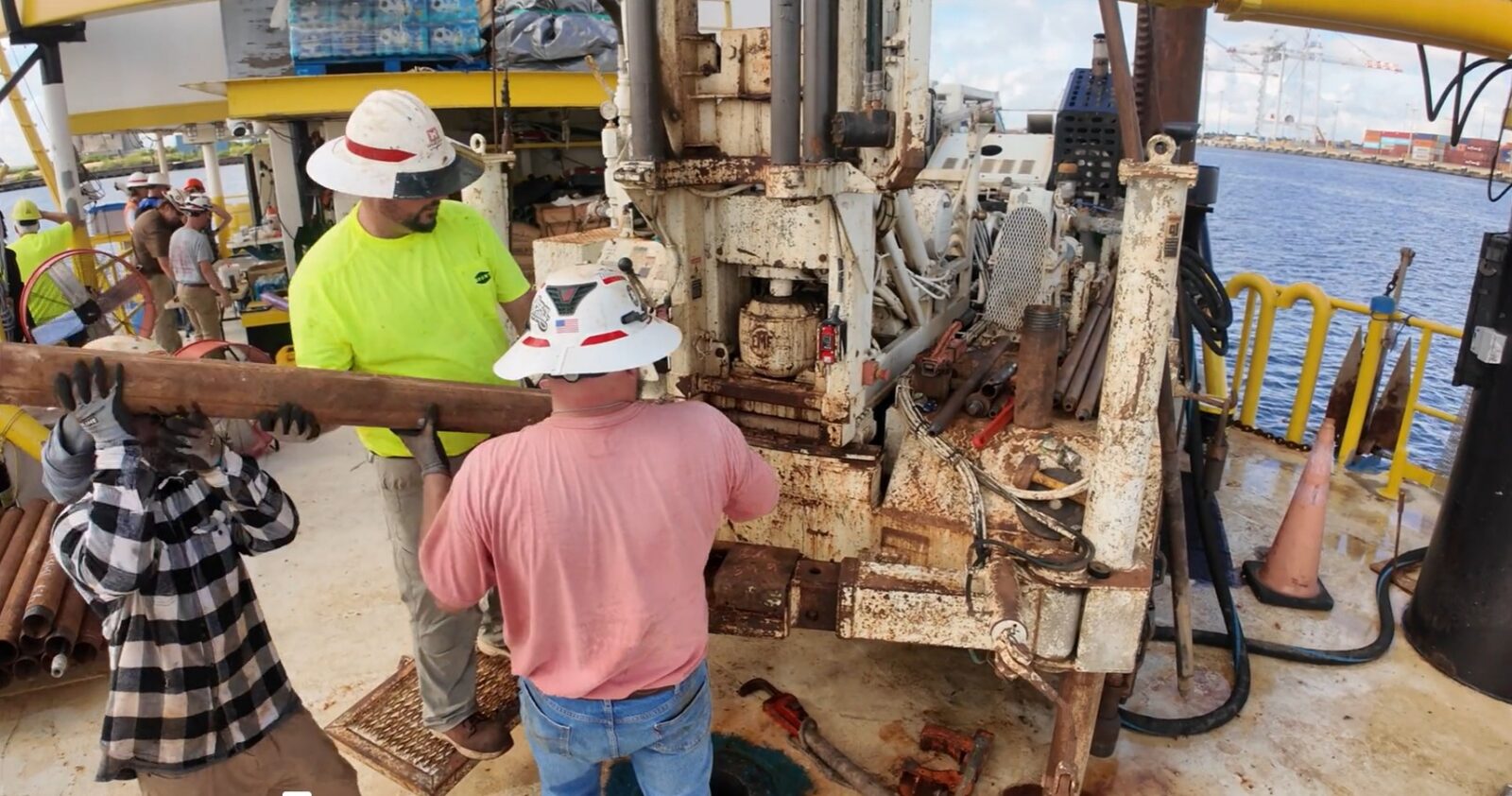
The investigation involves drilling soil borings and collecting subsurface samples at multiple locations along the approximately 42-mile navigation channel to assess soil conditions and inform engineering and design decisions. Fieldwork is expected to continue through the end of 2026.
Tampa’s Harbor Navigation Improvement Project is intended to allow vessels to carry more cargo per call, improving shipping efficiency and potentially reducing the number of vessel calls required to transport the same volume of goods.
The project could lower transportation costs and improve the movement of fuel, construction materials, steel, automobiles and consumer goods throughout west-central Florida.
An Army Corps’ General Reevaluation Report estimates that routing cargo through Port Tampa Bay rather than another southeastern U.S. port, followed by overland trucking to the region, could eliminate more than 17 million truck miles annually.
Based on the report’s 2024 assumptions, that reduction could avoid an estimated 26,000 metric tonnes of carbon dioxide emissions annually while reducing highway congestion and wear on Florida’s roads. The report also estimates the project could reduce transportation costs by approximately US$90 million annually nationwide.
The project is expected to generate more than 21 million cubic yards of dredged material, much of which could be used for environmental restoration and coastal resilience initiatives throughout Tampa Bay.
Potential applications include beach and dune restoration, island stabilization and habitat creation. Planned initiatives include using dredged material to help restore and stabilize Egmont Key, a barrier island at the entrance to Tampa Bay.
The project also includes opportunities to create and restore marine habitats, including hard-bottom and seagrass areas, as well as habitat for sea turtles and shorebirds. Additional work would restore approximately 55 acres of deep-water area near the Sunshine Skyway Bridge to create more productive shallow-water habitat.
The channel design incorporates a channel-within-a-channel approach, which would deepen the centre portion of the existing navigation channel while minimizing expansion of its overall footprint.
“A project of this scale requires thoughtful engineering that considers both navigation needs and the natural environment,” said Port Tampa Bay President and CEO Paul Anderson. “By exploring innovative approaches to channel design and finding beneficial uses for dredged material, we have an opportunity to advance critical infrastructure while supporting habitat restoration and the long-term health of Tampa Bay.”