Florida Construction News staff writer
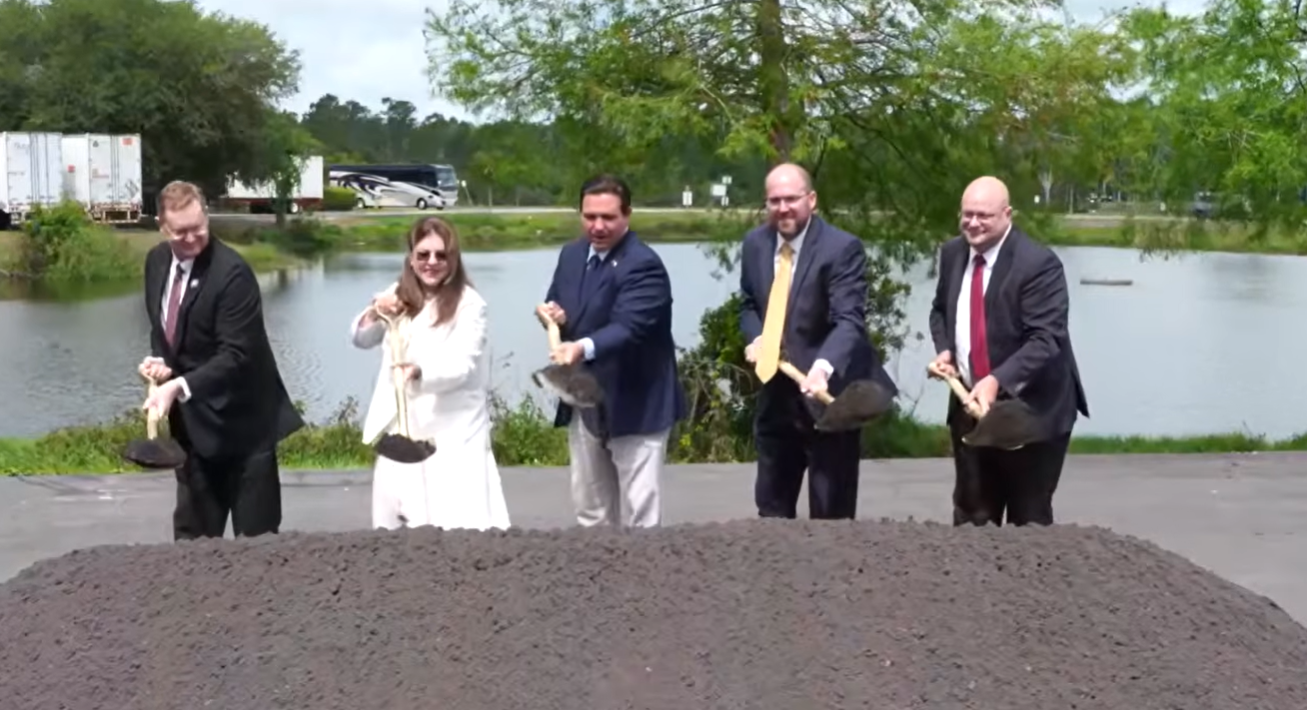
The Florida Department of Transportation (FDOT) has broken ground on the reconstruction of the Interstate 95 interchange at U.S. 1 in Ormond Beach, launching a major infrastructure project that state officials say will improve safety, reduce congestion and support long-term economic growth in Volusia County.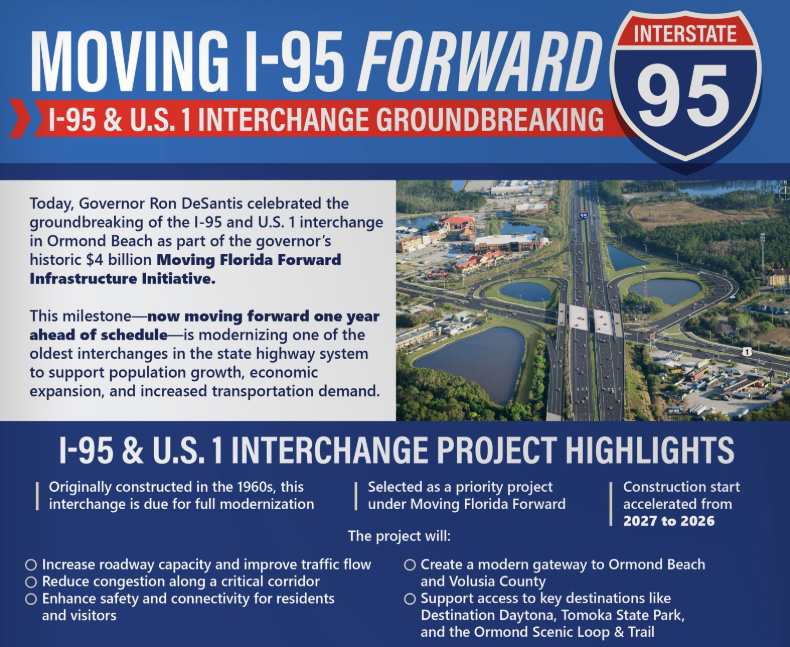 State officials joined local leaders for the ceremony celebrating the start of work on one of the oldest interchanges in Florida’s state highway system. The project is being advanced a year ahead of schedule through the state’s Moving Florida Forward initiative.
“I was proud to announce the groundbreaking of the reconstructed I-95 and U.S. 1 interchange a year ahead of schedule,” Gov. Ron DeSantis said in a statement. “Thanks to responsible fiscal governance, we are in the position to make transformative investments in our state’s infrastructure.”
The project was originally expected to begin in 2027 but has now been accelerated 15 to 20 years ahead of its previous long-range timeline, according to the state.
“These new enhancements will bring much needed congestion relief and safety improvements as U.S. 1 traffic volumes are expected to double in the next 20 years,” said FDOT Secretary Jared W. Perdue. “By reconstructing the I-95 interchange and increasing U.S. 1 capacity by 50%, this project is expected to have a $1.2 billion regional economic impact in the Volusia County community.”
The reconstruction will include three new bridges, redesigned loop ramps and widened off-ramps intended to improve traffic flow and safety for motorists entering and exiting I-95. The northbound off-ramp and southbound on-ramp will also be extended to provide drivers with additional time to merge and adjust speeds.
In addition, a one-mile stretch of U.S. 1 will be widened to six lanes.
FDOT officials said the accelerated timeline was made possible through a Modified Phased Design-Build delivery method developed by the department. The approach combines elements of traditional project delivery systems to speed up construction, streamline resources and reduce costs.
The new interchange is also expected to serve as a gateway feature for Ormond Beach, incorporating decorative architectural elements designed to reflect the local community while supporting future growth and economic development.