Florida Construction News staff writer
Governor Ron DeSantis has signed two new laws that he says are aimed at limiting government involvement in diversity, equity and inclusion (DEI) programs and restricting state and local policies tied to net-zero greenhouse gas emissions and carbon pricing.
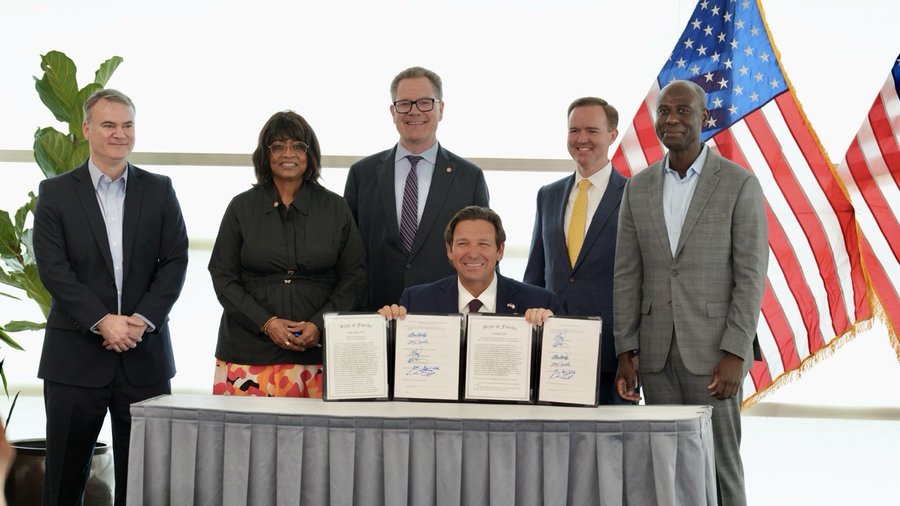
The legislation was signed in Jacksonville and immediately framed by the governor as a move to “protect Floridians against radical climate agendas” and reduce what he described as government overreach.
Today in Jacksonville, I signed two important bills to limit government overreach and prevent local authorities from imposing carbon taxes and discriminatory DEI mandates on Floridians,” Desantis wrote in a statement on social media. “SB 1134 prohibits counties, municipalities, contractors and grantees from using public funds to promote DEI, or maintain DEI offices or personnel. Violations will be classified as misfeasance or malfeasance in office, and residents will be able to take civil action.
“HB 1217 prevents state and local governments from adopting, enforcing, or funding “net-zero” greenhouse gas policies, including carbon taxes and emissions trading programs.”
The first bill, SB 1134, prohibits counties and municipalities from funding, promoting or implementing DEI initiatives. It bars local governments from establishing DEI offices, officers or programs, and prevents the use of taxpayer dollars for DEI-related initiatives or contractors. The law also requires grant recipients to certify that public funds will not be used to advance DEI programs and includes enforcement provisions and penalties for violations.
The second measure, HB 1217, restricts state and local governments from adopting or enforcing net-zero emissions targets or carbon tax policies. It prohibits new taxes, fees or penalties tied to greenhouse gas emissions and bars participation in carbon trading systems such as cap-and-trade programs. The legislation also blocks taxpayer funding from supporting organizations that promote net-zero policies and requires annual reporting to ensure compliance.
Supporters of the bills said the measures are intended to reduce costs for residents and businesses and prevent what they characterized as burdensome regulatory frameworks.
“Net-zero mandates and carbon taxes increase costs on families, businesses, and consumers,” said Rep. Berny Jacques. “This bill protects Floridians from higher energy prices, increased transportation costs, and other hidden junk fees caused by emissions mandates and burdensome regulations.”
Sen. Clay Yarborough said the DEI restrictions are intended to ensure public spending is tied to merit-based decision-making.
“Decisions related to individuals and actions should be based on merit,” Yarborough said, adding that taxpayer dollars should not be used for DEI initiatives amid rising costs of living.
The measures are expected to impact state and local governments, including public procurement policies and how agencies structure contracts, grants and environmental or workforce-related initiatives.
DeSantis said the laws will ensure decision-making remains in the hands of state and local officials rather than outside organizations or advocacy groups.