Florida Construction News staff writer
The City of St. Petersburg has opened the new Benjamin F. Shirley Sr. Sanitation Building, described as “a sustainable, state-of-the-art facility” named in honour of a long-serving public servant and community leader.
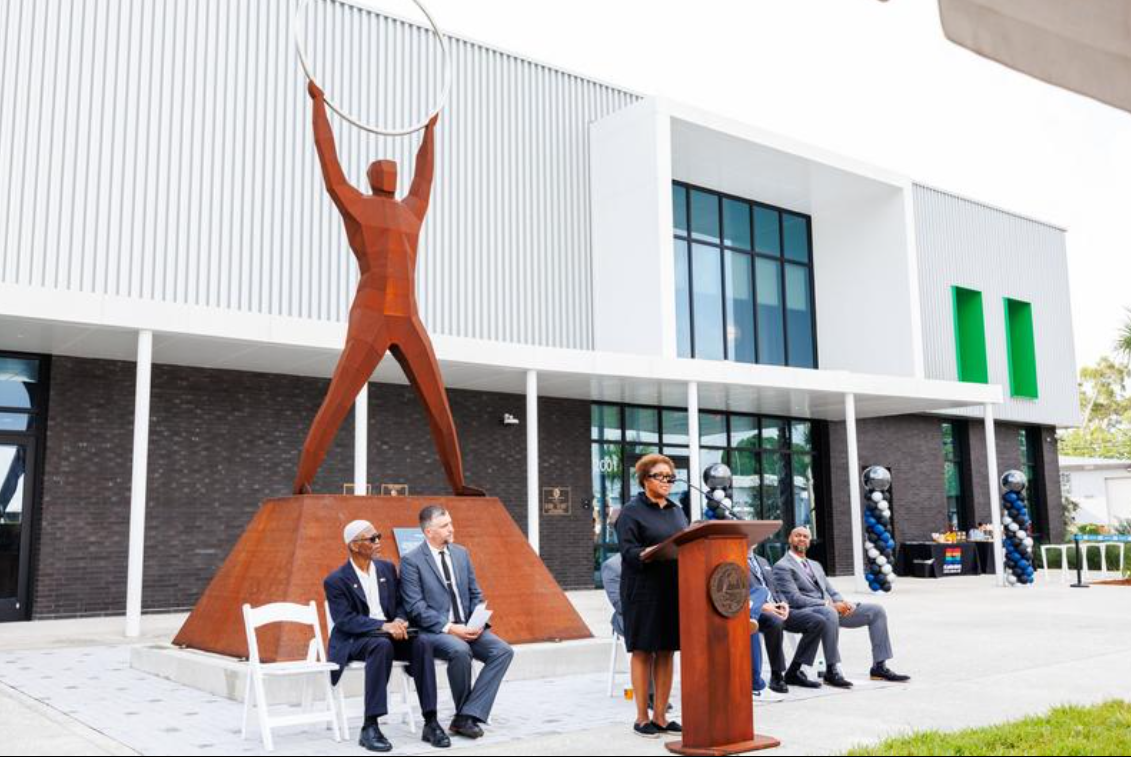
City officials, sanitation employees, and community members gathered at the Joseph E. Savage Sanitation Complex for a ribbon-cutting ceremony celebrating the milestone project. The 18,600-sq. ft., two-story building consolidates administrative and operational functions that were previously spread across two aging facilities and includes space for emergency operations.
“While we celebrate the future and innovation, we’d be remiss not to honor our history,” said Mayor Kenneth T. Welch during the ceremony. “This new facility stands on the legacy of two remarkable leaders, Joseph E. Savage and Benjamin F. Shirley. Sanitation is a critical component to any city or municipality’s infrastructure.”
The construction manager for the $14-million, 18,600-sq. ft. building was J. Kokolakis Contracting.
Sweet Sparkman Architects & Interiors, a Sarasota-based firm, spearheaded the project as lead architects and designers of record.
The new structure is the city’s first designed to achieve net-zero energy consumption. It is fully powered by solar energy and built with environmentally efficient systems. Officials say it is on track to receive LEED Gold Certification.
The building honours Benjamin F. Shirley Sr., who served in the Sanitation Department for 48 years and was known as a tireless advocate for recycling and community engagement. It stands within the larger Joseph E. Savage Sanitation Complex, named after the leader of the 1968 sanitation workers’ strike—a pivotal moment in the city’s civil rights history.
A sculpture titled Oneness by artist Donald Gialanella welcomes visitors at the entrance. The piece symbolizes unity and pays tribute to the collective strength of sanitation workers during the 1968 strike.
“This facility not only represents our commitment to sustainability and efficient city operations,” said Welch, “but also ensures the stories and contributions of those who paved the way are remembered for generations to come.”